2026 ATENS - Literacy in the Modern World
Conference Email
Conference Location
Lighthouse Arts Center & Online (ONLINE REGISTRATION DEADLINE EXTENDED TO OCTOBER 20, 2026)
Satellite Sessions
We would like to do online as well. The venue is assisting us in this. Our capacity would exceed 300 in that case.
Dietary Needs
Gluten free and vegetarian optuions for snack break
Conference Dates
October 23, 2026 9:00 AM — October 23, 2026 3:00 PM
Registration
Opens: September 17, 2026 7:00 AM
Closes: October 20, 2026 11:59 PM
Fees
| Fee | Amount |
|---|---|
| NSTU Members | $100.00 |
| Substitutes | $90.00 |
| Pre-Service Teachers | $90.00 |
| Retirees | $90.00 |
| Affiliate/Other | $100.00 |
Payment Methods: Online
Sessions and Workshops
Professional Association Executive and Volunteer Conference Day Tasks
October 23, 2026 8:00 AM — October 23, 2026 4:00 PM
This session is intended for the tasks of ONLY the planning and hosting team(s) of the Professional Association.
ATENS Virtual Option
October 23, 2026 9:00 AM — October 23, 2026 3:00 PM
By selecting this option, you will be attending the ATENS conference virtually.
IMPORTANT
Members who choose to attend the conference virtually should inform their principal/immediate supervisor to confirm that their regular workplace is available on conference day. A member wanting to participate in the conference from an alternate location must have prior approval from their principal/immediate supervisor.
You will participate in the following workshops:
VIRTUAL MORNING SESSION 1: 9am-10:30am
Motivating your students in a complex world with professor and author Alexander MacLeod
Old light for dark times.
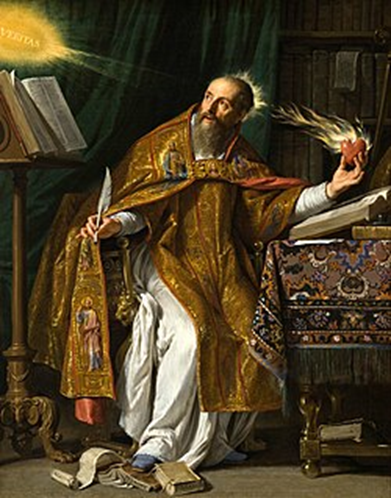
There’s a painting of a very frustrated Saint Augustine that my students love. It was done in 1645, but it imagines Augustine hard at work, probably somewhere around the year 390. In real life, this scene would have happened more than fifteen hundred years ago, but it’s still familiar stuff for my students. The great philosopher is looking very rumpled and exhausted and he’s obviously pulling an all-nighter trying to get his paper done for tomorrow. It’s dark and the floor is littered with notes and ripped up paper and half open books. Saint Augustine has not managed his time well. He is using his foot to try and hold his place on one page while he has his pen held halfway between the book he is reading on his left and the half-filled page on the right.
“Can you see what he is trying to do,” I ask the students?
“Oh yeah,” they respond half-heartedly. “I was sitting in my chair exactly like that last night, at two in the morning, in Halifax, in the middle of the winter, in 2026.”
This recognition that only art can provide - a kind of pure connection (and maybe even a little comfort?) - extending across space and time is the subject of this presentation. I think many of us, teachers and students alike, feel like we are trapped in the same dark room as poor Augustine. The “value” of humanities education is under attack everywhere we look, and in the endless AI debate, it can seem like there is no place anymore, no use, for the kind of deeply challenging reading and writing that we all struggle so hard to produce.
“Don’t give up!” this painting and the works of Augustine, and many others, teach us. “Stick with it! Hold on. The change is coming.”
This process of “breaking-through” is represented in the painting by a weird streak of fiery light that comes cutting through the dark. This beam, labelled “veritas,” flies out of the blackness, and kind of bursts through Augustine’s head, then sits there in his beating heart which is held over the page. The painting captures that eureka moment that all teachers and students are always seeking, when, after a lot of hard slogging, we finally see how our plan is going to work, and we know it’s going to be ok.
“Did anybody here recently get visited by a mind-blowing fire storm of inspiration,” I sometimes ask my students.
“Nope, not yet,” they all respond. “But maybe tomorrow night?”
This talk is about finding company, comfort and inspiration in the work that has come before us so that we can continue to teach people to keep this process going into the future.
Biography
Dr. Alexander MacLeod is a professor of Literature, Creative Writing, and Atlantic Canada Studies at SMU. As a fiction writer, his work has been published in The New Yorker, Granta, The Guardian and The Globe and Mail. His first book, Light Lifting, was a finalist for the Giller Prize, and his most recent collection of stories, Animal Person, was named a book of the year by The New Yorker, The Irish Times, The Globe and Mail, and CBC Books.
VIRTUAL MORNING SESSION 2: 10:45am-noon
Teaching Queer Lit. Across Generations with Luke Hathaway, Atticus Hagel & Robert Lapp
Three generations of queer-identified learners and educators consider the joys and challenges of teaching literature with queer representation. Why should educators at all levels be teaching literature with queer representation? What does queer representation in literature even look like? What are the rewards and challenges of offering this material to students at various levels?
Join graduate student Atticus Hagel, Associate Professor Dr. Luke Hathaway, and Professor Emeritus Dr. Robert Lapp, as they consider the moments of challenge, connection, or inspiration that have animated their understanding of these questions.
About the panelists: Atticus J. Hagel (they/them) is a Master’s student at McMaster University in Greek and Roman Studies. They graduated with a Bachelor of Arts from Saint Mary’s University (Halifax, Nova Scotia) in 2026, majoring in Ancient Studies and Honours English Literature. Their research focuses on LGBTQIA+ identities in the ancient mediterranean and in Classical reception literature, and how biases in past research impact the conclusions regarding queer identities. Luke Hathaway (he/him) is a poet, librettist/lyricist, performer, and producer, who collaborates with artists and ensembles near and far in the work of mythopoeic storytelling; he is particularly passionate about telling the trans and queer stories that are close to his heart. With Daniel Cabena, Luke is Artistic Co-Director of the performance collective ANIMA; he is also a founding and core member of the Fractal Arts Collective, with opera creators Debi Wong and Teiya Kasahara. He teaches English and Creative Writing at Saint Mary’s University. Robert Lapp (he/him) is Professor Emeritus at Mount Allison University. Before his retirement in 2023, he was Head of the Department of English, where he taught courses in 18th- and 19th-century literature and the roots of ecological writing in Romanticism. Winner of a 3M National Teaching Fellowship in 2008, he served as President of the Society for Teaching & Learning in Higher Education from 2014 to 2017.
VIRTUAL AFTERNOON SESSION: 1:30-3pm
What is Teaching, Learning and Literacy in the Inescapable age of AI? with Adam Hinton
|
In Ancient Greece, Socrates argued that moving from oral education to writing would destroy human memory. In the 1400s, universities petitioned to ban the printing press, fearing a 'harmful abundance' of information. The television, the radio, the calculator, and the internet all faced mass resistance from educators. In each case, we have seen a cycle of panic, prohibition, and—eventually—integration. Today, that 2,000-year tradition continues with the most powerful technological disruption education has ever faced in the form of Artificial Intelligence. You’re using it, your students are using it, and parents are using it. AI is now embedded into our daily lives and the very software we provide to our students. But what does this mean for the state of learning itself in 2026? How do we adapt to this rapidly shifting landscape? Most importantly: How do we capture what children know, show, and can do when knowing, showing, and doing can be automated? This session offers a new paradigm for modern education in the face of monumental change. Moving beyond the 'wow factor' of AI, we will tackle the 'how factor' of Human-Centered instruction and assessment. Grounded in established guidelines and emergent global practices, we will explore how to balance technological productivity with the essential human elements: relationships, critical thinking, and creativity. Teachers will gain practical strategies to navigate the 'Post-Plagiarism' era, shifting the focus from the final product to the learning process. We will dive into the 'Path of Acceptable Use,' providing clear frameworks for student expectations, 'AI-Resistant' assignment design, and the emergence of the 'Hybrid Teacher'—an educator who uses technology to reclaim their time for what matters most: the students. Adam Hinton is an educator for Chignecto Centre Regional Centre of Education. He is a graduate of St.FX University and holds masters in Technology Integration and Curriculum Design. He has served as a Technology Integration Consultant, Assessment and Student Success Consultant and Literacy Consultant in CCRCE. |
IN PERSON: Full Day Session
October 23, 2026 9:00 AM — October 23, 2026 3:00 PM
By selecting this option, you will be attending the ATENS conference IN PERSON
You will participate in the following workshops:
IN PERSON MORNING SESSION 1: 9am-10:30am
Motivating your students in a complex world with professor and author Alexander MacLeod
Old light for dark times.
There’s a painting of a very frustrated Saint Augustine that my students love. It was done in 1645, but it imagines Augustine hard at work, probably somewhere around the year 390. In real life, this scene would have happened more than fifteen hundred years ago, but it’s still familiar stuff for my students. The great philosopher is looking very rumpled and exhausted and he’s obviously pulling an all-nighter trying to get his paper done for tomorrow. It’s dark and the floor is littered with notes and ripped up paper and half open books. Saint Augustine has not managed his time well. He is using his foot to try and hold his place on one page while he has his pen held halfway between the book he is reading on his left and the half-filled page on the right.
“Can you see what he is trying to do,” I ask the students?
“Oh yeah,” they respond half-heartedly. “I was sitting in my chair exactly like that last night, at two in the morning, in Halifax, in the middle of the winter, in 2026.”
This recognition that only art can provide - a kind of pure connection (and maybe even a little comfort?) - extending across space and time is the subject of this presentation. I think many of us, teachers and students alike, feel like we are trapped in the same dark room as poor Augustine. The “value” of humanities education is under attack everywhere we look, and in the endless AI debate, it can seem like there is no place anymore, no use, for the kind of deeply challenging reading and writing that we all struggle so hard to produce.
“Don’t give up!” this painting and the works of Augustine, and many others, teach us. “Stick with it! Hold on. The change is coming.”
This process of “breaking-through” is represented in the painting by a weird streak of fiery light that comes cutting through the dark. This beam, labelled “veritas,” flies out of the blackness, and kind of bursts through Augustine’s head, then sits there in his beating heart which is held over the page. The painting captures that eureka moment that all teachers and students are always seeking, when, after a lot of hard slogging, we finally see how our plan is going to work, and we know it’s going to be ok.
“Did anybody here recently get visited by a mind-blowing fire storm of inspiration,” I sometimes ask my students.
“Nope, not yet,” they all respond. “But maybe tomorrow night?”
This talk is about finding company, comfort and inspiration in the work that has come before us so that we can continue to teach people to keep this process going into the future.
Biography
Dr. Alexander MacLeod is a professor of Literature, Creative Writing, and Atlantic Canada Studies at SMU. As a fiction writer, his work has been published in The New Yorker, Granta, The Guardian and The Globe and Mail. His first book, Light Lifting, was a finalist for the Giller Prize, and his most recent collection of stories, Animal Person, was named a book of the year by The New Yorker, The Irish Times, The Globe and Mail, and CBC Books.
IN PERSON MORNING SESSION 2: 10:45am-noon
Teaching Queer Lit. Across Generations with Luke Hathaway, Atticus Hagel & Robert Lapp
Three generations of queer-identified learners and educators consider the joys and challenges of teaching literature with queer representation. Why should educators at all levels be teaching literature with queer representation? What does queer representation in literature even look like? What are the rewards and challenges of offering this material to students at various levels?
Join graduate student Atticus Hagel, Associate Professor Dr. Luke Hathaway, and Professor Emeritus Dr. Robert Lapp, as they consider the moments of challenge, connection, or inspiration that have animated their understanding of these questions.
About the panelists: Atticus J. Hagel (they/them) is a Master’s student at McMaster University in Greek and Roman Studies. They graduated with a Bachelor of Arts from Saint Mary’s University (Halifax, Nova Scotia) in 2026, majoring in Ancient Studies and Honours English Literature. Their research focuses on LGBTQIA+ identities in the ancient mediterranean and in Classical reception literature, and how biases in past research impact the conclusions regarding queer identities. Luke Hathaway (he/him) is a poet, librettist/lyricist, performer, and producer, who collaborates with artists and ensembles near and far in the work of mythopoeic storytelling; he is particularly passionate about telling the trans and queer stories that are close to his heart. With Daniel Cabena, Luke is Artistic Co-Director of the performance collective ANIMA; he is also a founding and core member of the Fractal Arts Collective, with opera creators Debi Wong and Teiya Kasahara. He teaches English and Creative Writing at Saint Mary’s University. Robert Lapp (he/him) is Professor Emeritus at Mount Allison University. Before his retirement in 2023, he was Head of the Department of English, where he taught courses in 18th- and 19th-century literature and the roots of ecological writing in Romanticism. Winner of a 3M National Teaching Fellowship in 2008, he served as President of the Society for Teaching & Learning in Higher Education from 2014 to 2017.
IN PERSON AFTERNOON SESSION: 1:30-3pm
What is Teaching, Learning and Literacy in the Inescapable age of AI? with Adam Hinton
|
In Ancient Greece, Socrates argued that moving from oral education to writing would destroy human memory. In the 1400s, universities petitioned to ban the printing press, fearing a 'harmful abundance' of information. The television, the radio, the calculator, and the internet all faced mass resistance from educators. In each case, we have seen a cycle of panic, prohibition, and—eventually—integration. Today, that 2,000-year tradition continues with the most powerful technological disruption education has ever faced in the form of Artificial Intelligence. You’re using it, your students are using it, and parents are using it. AI is now embedded into our daily lives and the very software we provide to our students. But what does this mean for the state of learning itself in 2026? How do we adapt to this rapidly shifting landscape? Most importantly: How do we capture what children know, show, and can do when knowing, showing, and doing can be automated? This session offers a new paradigm for modern education in the face of monumental change. Moving beyond the 'wow factor' of AI, we will tackle the 'how factor' of Human-Centered instruction and assessment. Grounded in established guidelines and emergent global practices, we will explore how to balance technological productivity with the essential human elements: relationships, critical thinking, and creativity. Teachers will gain practical strategies to navigate the 'Post-Plagiarism' era, shifting the focus from the final product to the learning process. We will dive into the 'Path of Acceptable Use,' providing clear frameworks for student expectations, 'AI-Resistant' assignment design, and the emergence of the 'Hybrid Teacher'—an educator who uses technology to reclaim their time for what matters most: the students. Adam Hinton is an educator for Chignecto Centre Regional Centre of Education. He is a graduate of St.FX University and holds masters in Technology Integration and Curriculum Design. He has served as a Technology Integration Consultant, Assessment and Student Success Consultant and Literacy Consultant in CCRCE. |